

FKIP – Biology Education Students, Faculty of Teacher Training and Education (FKIP) Sebelas Maret University (UNS) ) Surakarta participated in an entrepreneurial internship at Tom Batik Indigofera. The business was founded in 2003, is located at Jalan Kenteng 7 Banaran Galur, RT 25/RW 13, Kulon Progo Regency.
Tom Batik is a brand name used to introduce the business of batik craftsmen with environmentally friendly natural dyes. The name Tom Batik was inspired by the name of the plant used to make natural dyes, namely the Tom plant or in a scientific language called Indigofera tinctoria.
According to Widodo Simbolon as the owner as well as a batik craftsman, producing a quality batik requires a process that involves many people it.
“It’s not just people who make batik from plain cloth to beautiful batik motifs. Behind it, many hands take part in the process of making batik. Starting from cotton farmers who provide the basic ingredients for making yarn, craftsmen who spin yarn into cloth, makers of batik equipment such as canting caps, and others. It’s all the result of the work of many hands to finally produce a good batik,” he explained.
Indigofera tinctoria or tom plant in Javanese produces beautiful blue color. To make this color, indigo leaves are soaked overnight or for several days. Furthermore, the solution is buried (aeration) then mixed with lime and the burial is continued. After a dark blue color is formed, the solution is allowed to settle again so that it settles to form a paste.
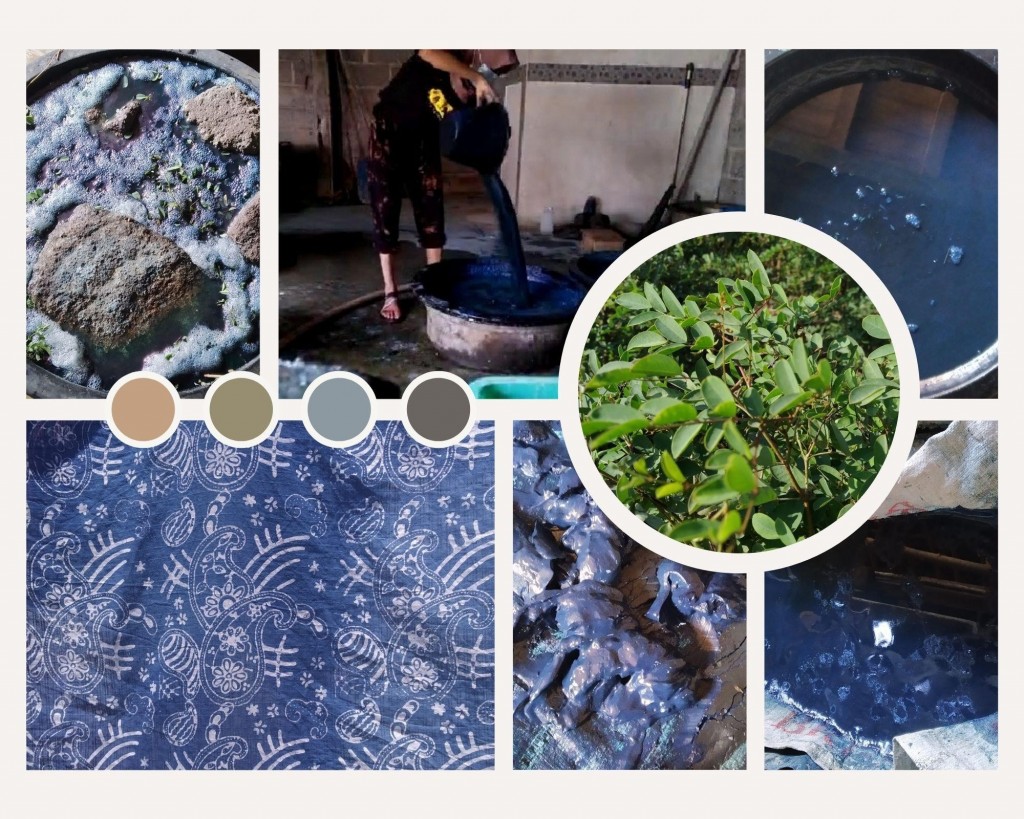
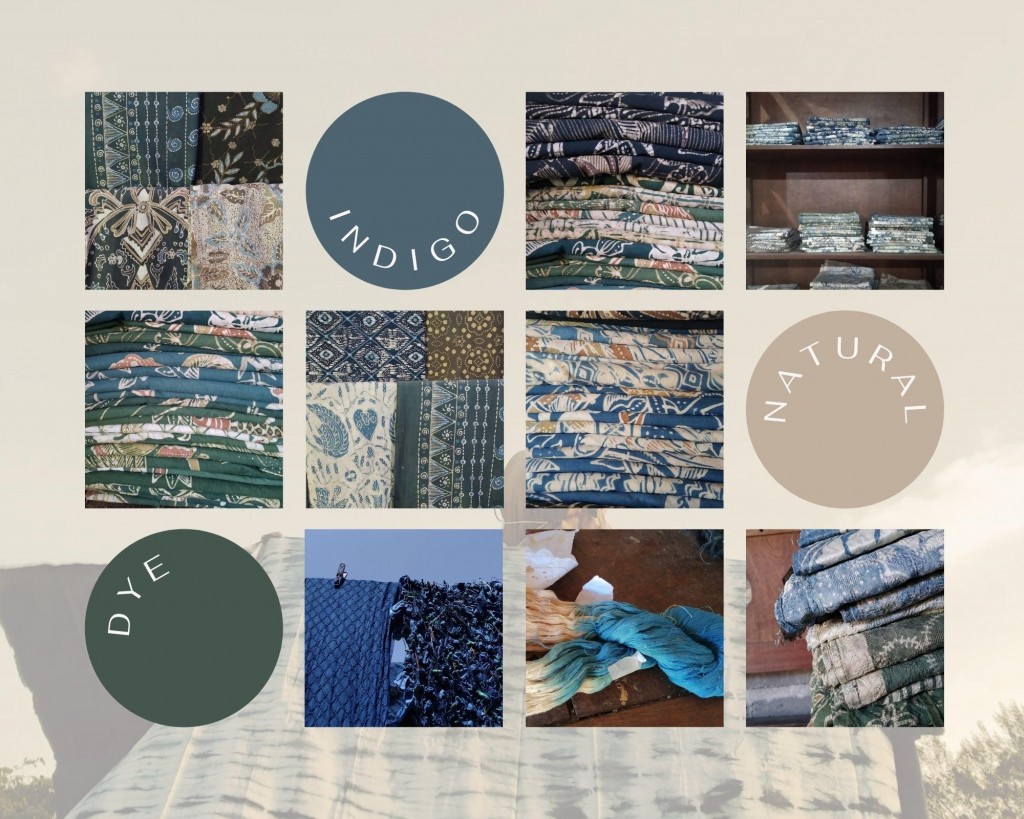
Usually, 10 kg of indigo leaves can produce 500gr to 1 kg of natural dye paste. In applying the indigo blue color to the fabric, 1 kg of the finished indigo paste is dissolved in 10 liters of water. The reducing agent for the indigo color pigment is brown sugar, but it can also be varied as Widodo did use cassava tape that has been fermented for years, this method is cheaper and produces the same color as brown sugar.
In addition to blue, there is also a natural yellow color that comes from the skin of jelawe fruit, reddish-orange color from tall stems and bark of secang, reddish-brown color from mahogany stems, and dark color from tunjung. These basic colors can produce color variations, for example, green which is obtained by dipping a cloth in indigo blue dye and then adding it to jelawe yellow dye.
Delivered Anggie Meilinda Zienitha and Nafi Satur Rohmah that during practice guided in Tom Batik, he has gained a lot of new knowledge, ranging from the history of plants Tom, various natural dyes, how to create a true dye, the batik process until competition batik natural dyes to synthetic on the market.
Through this activity, it is hoped that students can continue to preserve the natural dyeing culture of batik which is adapted to the times. Synthetic fabric dyes can damage our ecosystem, so students play an important role in maintaining the stability of the ecosystem, one of which is by preserving natural dyes and making products with high economic value.
Reporter: Muhammad Muzaqqi
Editor: Aulia Anjani
https://fkip.uns.ac.id/
https://www.instagram.com/fkipuns.official/
#fkipuns
#fkipbagus
#uns
#universitassebelasmaret
#unsbisa
