
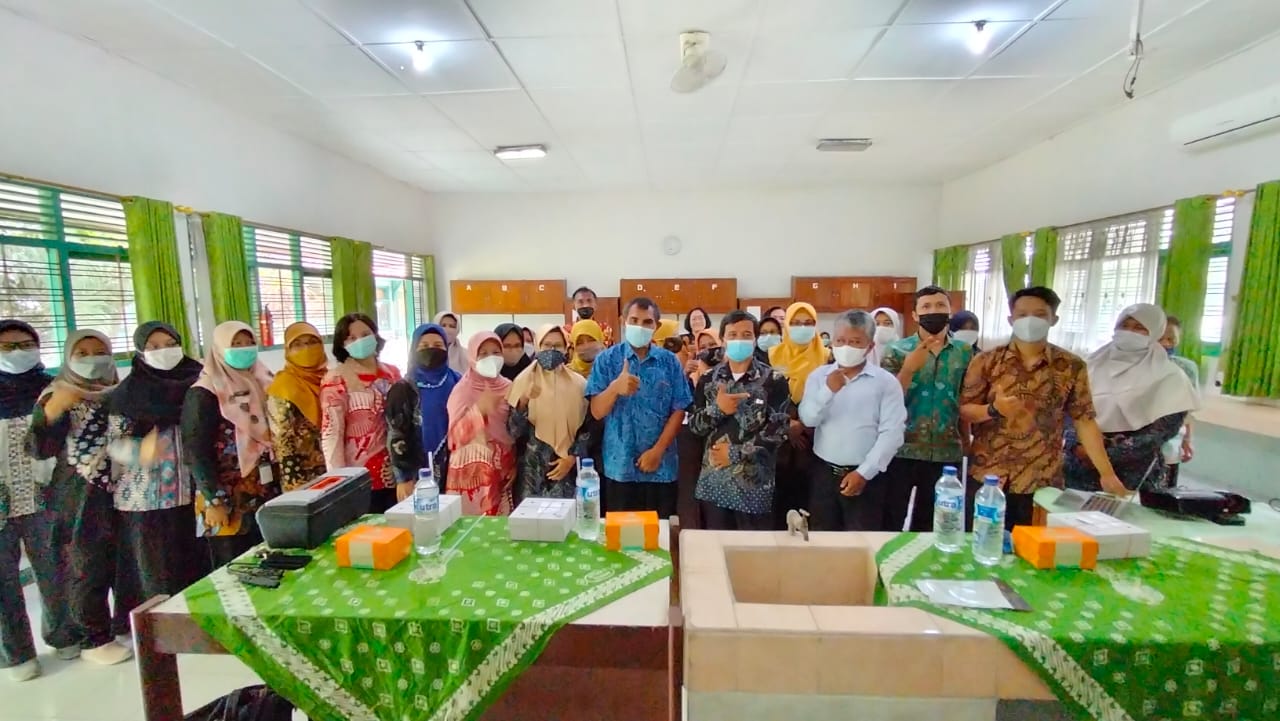
FKIP – Postgraduate Study Program (Prodi) Science Education Faculty of Teacher Training and Education (FKIP) Sebelas Maret University (UNS) Surakarta held a Community Service event at SMP Negeri 3 Karanganyar. This community service activity which discussed “K3 and Repair and Maintenance” was held on Saturday (2/10/2021).
The event was attended by Dr. Bramastia, Dr. Sarwanto, six representatives of Postgraduate Program Science Education students, and followed by 28 teachers who are members of the Working Group (Pokja) 5 Karanganyar Regency. The event was opened by the Coordinator of Pokja 5, namely Djiman, and continued with remarks by Dr. Sarwanto. In his remarks, he explained that as a result of the pandemic, laboratories were rarely used so that the maintenance of laboratory equipment was very limited which resulted in damage to laboratory equipment.
In this activity, which was held in the Natural Education Sciences (IPA) laboratory, State Junior High School (SMPN) 3 Karanganyar, Dr. Bramastia, M.Pd. delivered material on occupational safety and health (K3). In detail, he explained the dangers, principles of storage, storage methods, sources of accidents, and examples of accidents in the laboratory.
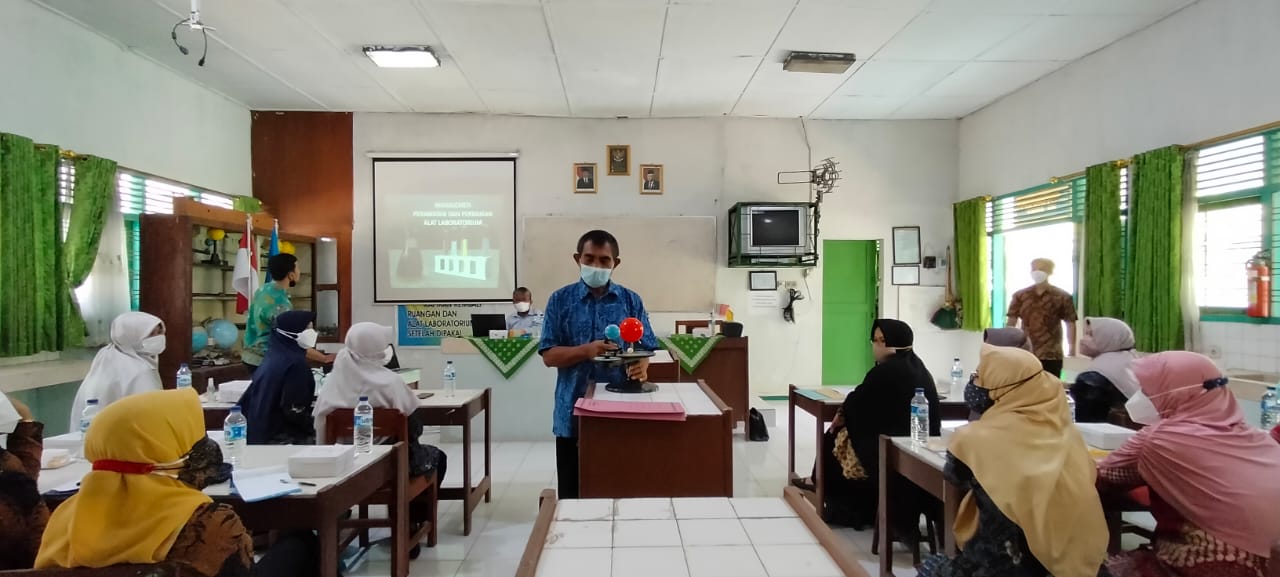
“Teachers are tasked with managing science management, including laboratories. In laboratory activities, K3 is needed to maintain workplace safety and comfort, so teachers need to know and master K3 actions in order to be able to handle all conditions in laboratory practicum activities,” said Dr. Bramastia, M.Pd.
K3 activities are related to machines, tools, materials, and the base of the practicum workplace. The purpose of K3 itself is to provide safety rights in every activity safely and efficiently to all laboratory users.
“It was also added that K3 equipment was divided into personal protective equipment and laboratory equipment during an emergency, as well as daily equipment for hazardous materials,” explained the Master of Science Education Lecturer at FKIP UNS.
Furthermore, the second material was about repair and maintenance which was delivered by Dr. Sarwanto which refers to the Regulation of the Minister of National Education (Permendiknas) Number 24 of 2007. Meanwhile, the order of repair and maintenance of laboratory equipment includes cleaning tools from dust, testing the functionality of tools, preparing tools and materials used for repair and maintenance, reading manuals, repairing according to the damage, and restore the tool according to the principle of tool storage.
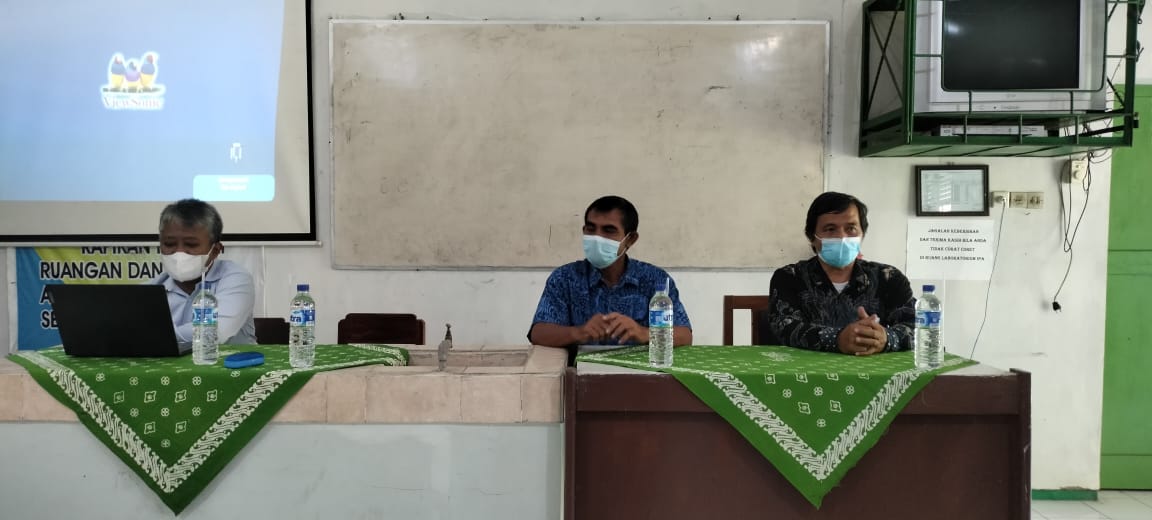
“Keep in mind that to prevent damage to the tool, you must pay attention to how to carry the tool, the principle of storing the tool, maintaining the environmental conditions according to the standard of the tool, to remove the set of tools before storing it,” said Dr. Sarwanto.
The Head of Postgraduate Science Education Study Program, FKIP UNS also said that teachers and laboratory assistants must understand the laboratory in accordance with the manual book.
“Teachers and laboratory assistants need to read, understand, and carry out maintenance according to the manual book to expedite the program for repair and maintenance of tools, it is necessary to design a budget for funds, long before its implementation, at least one year in advance,” Dr. Sarwanto explained.
Reporter: Muhammad Muzaqqi
Editor: Zalfaa Azalia Pursita
https://fkip.uns.ac.id/
https://www.instagram.com/fkipuns.official/
#fkipuns
#fkipbagus
#uns
#universitassebelasmaret
#unsbisa
