
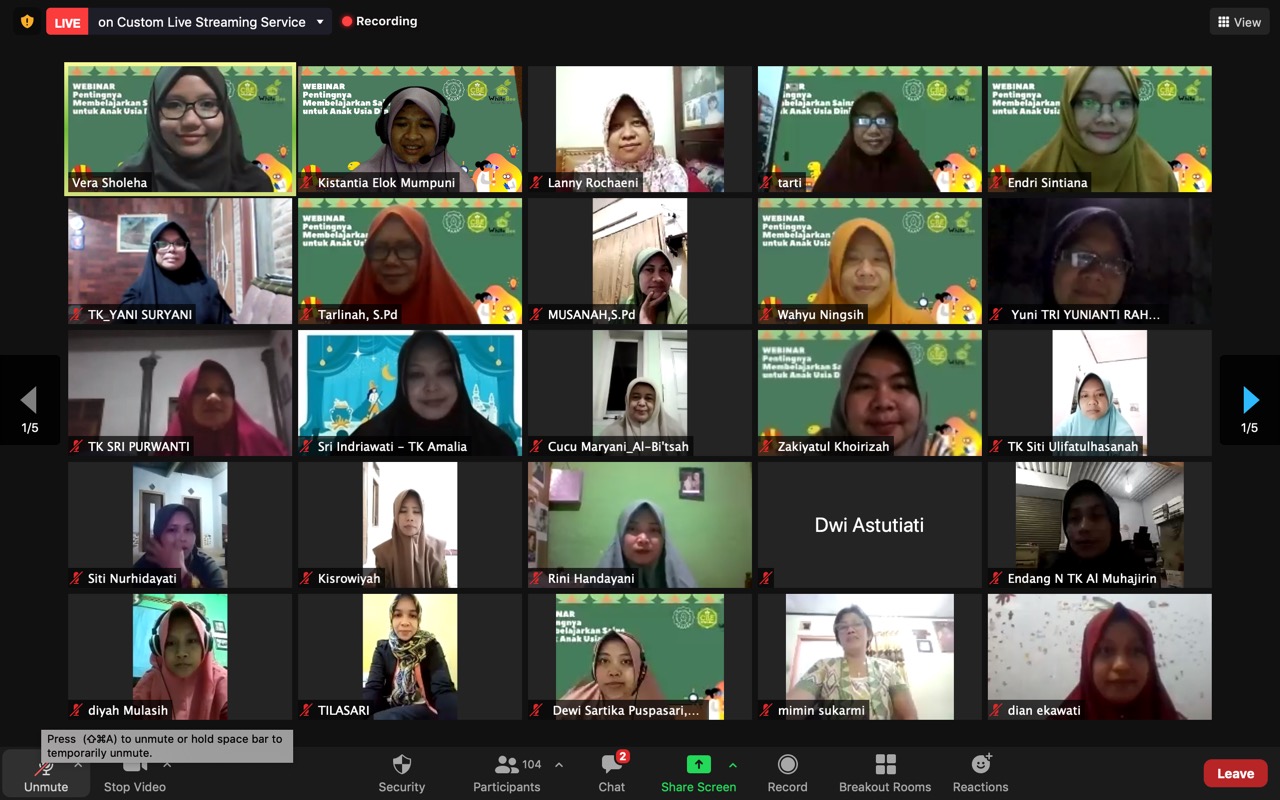
FKIP – Science Team for Early Childhood FKIP UNS carries out a community service program in the form of a Webinar Science Education for Early Childhood on Monday (22/11/2021).
This service team consists of Kistantia Elok Mumpuni, S.Pd., M.Pd.; Vera Sholeha, S.Pd., M.Pd.; and Endri Sintiana Murni, S.Pd., M.Pd.; and involving four FKIP UNS students.
The service team consists of lecturers and students with the Biology Education Study Program, PAUD PG Study Program, and the Fine Arts Education Study Program. The selection of teams with different scientific backgrounds is intended to provide the right education for parents in learning science for their children.

This webinar is held in four series, namely early childhood science learning; science process skills and organizing simple science activities at home; Arts and Sciences; and sharing experiences with science activities at home.
The background for obtaining this idea was obtained from the inaccurate perception of science and early childhood. This activity is intended so that parents understand how to convey science concepts and can accompany children to study at home.
“The idea of this service is motivated by the inaccurate perception that science is one of the branches of science that is considered difficult and not suitable for early childhood,” said Vera Sholeha, the first speaker in this webinar.
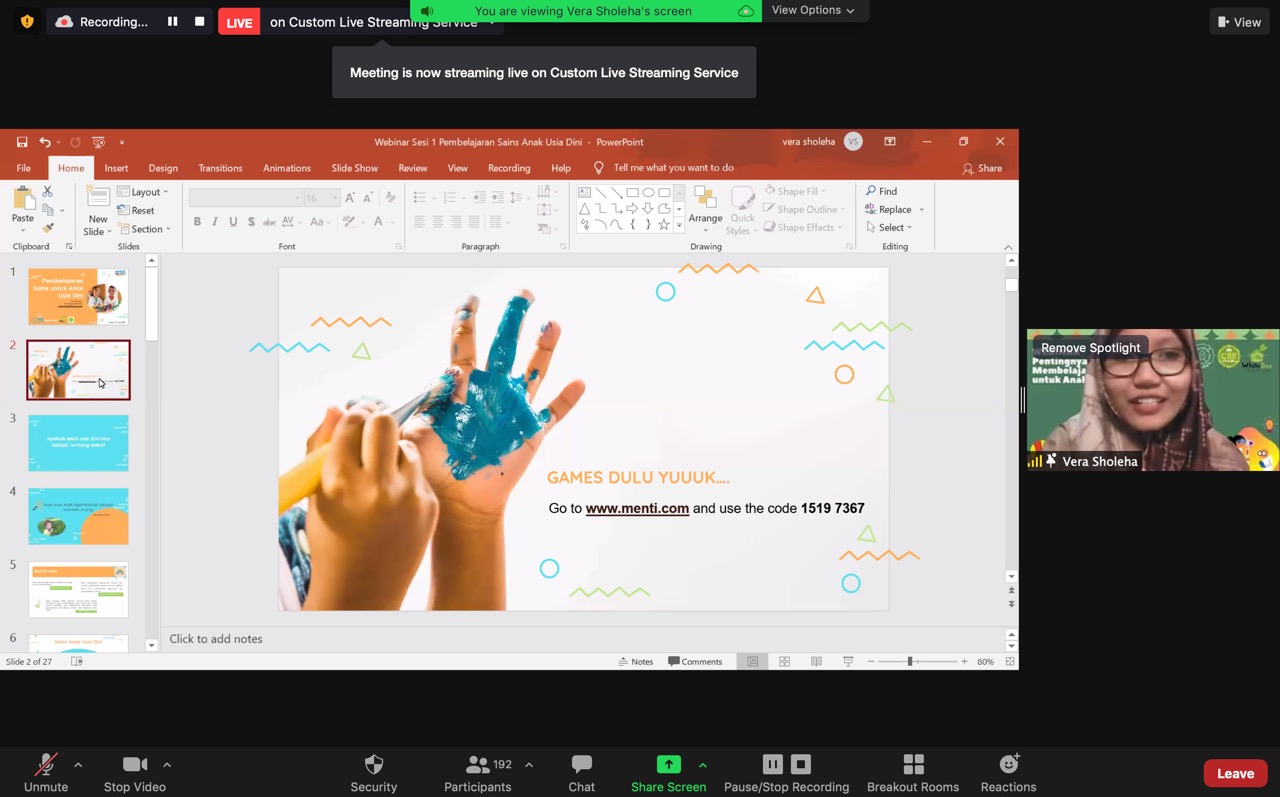
Vera continued her presentation about examples of science that are close to children’s lives.
“Science is very close to the daily life of children. For example, children play with sand by sifting/sifting. This is a physical example of separation based on the size and weight of the grains of sand. Other children’s activities such as seeing rainbows, making frogs, making tea, and playing catch and throw the ball are also related to science. The concept of science can be understood by children if it is explained in simple language,” he continued.
The activity continued with the presentation of series two which was delivered by Kristiana Elok Mumpuni, S.Pd., M.Pd. He delivered material about the preparation of simple science at home.
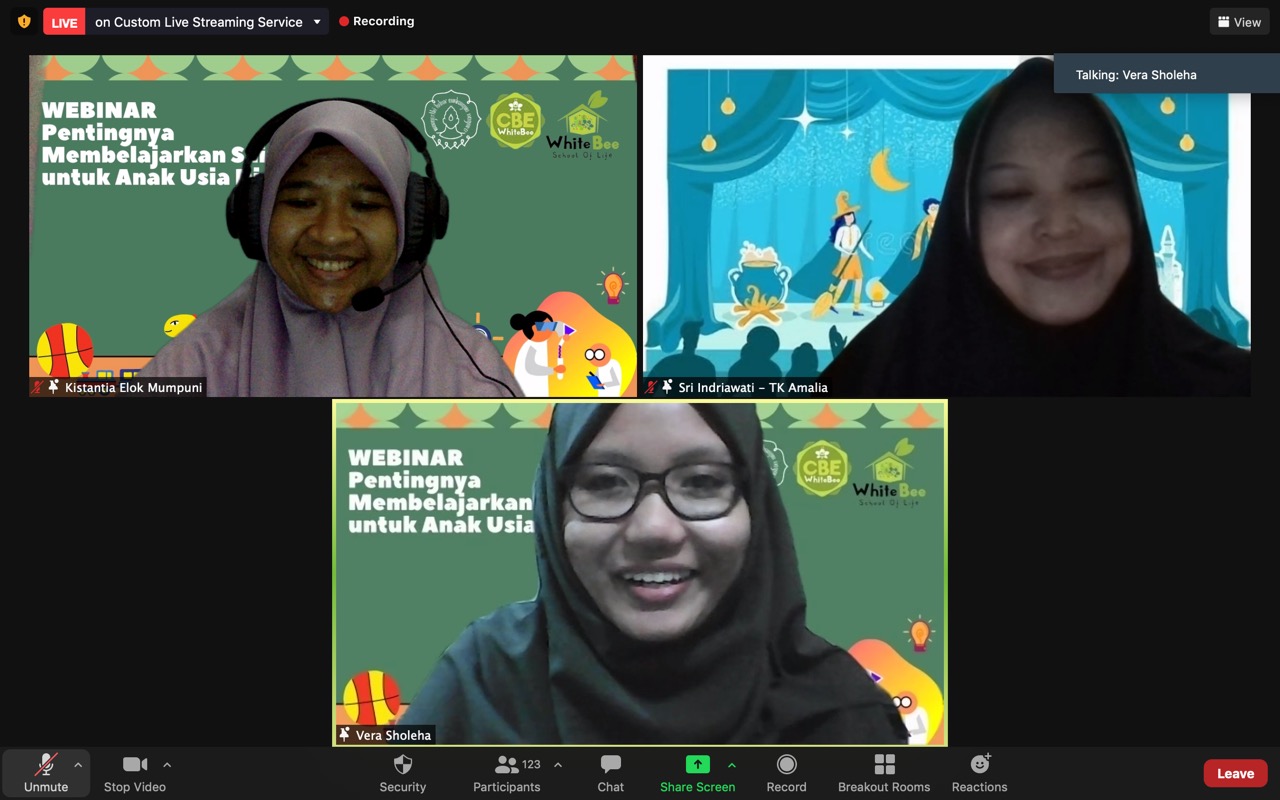
“Science understanding can be achieved by observing and practicing science. Things to consider in learning science include the age of the child, the theme of learning science, learning methods, tools and materials, and the ability of the companion/parent. Science does not have to be studied in a laboratory with sophisticated equipment, but it can be learned at home using materials that are around,” he explained.
Furthermore, art and science materials were delivered by Endri Sintiana Murni, S.Pd., M.Pd. which describes the relationship between art and science and its usefulness in introducing science to children.
“Children can express themselves freely, connecting what is in their mind in the form of work. Reports of scientific results can be written in the form of works of art. For example, describing the findings after planting mung bean seeds from the first to the tenth day. It’s art and biology. Another example is the sound produced from the knocking of the glass can produce musical arrangements. This is a combination of physics and art,” said Endri.
The last presentation of the series was closed by sharing experiences of science activities at home with children. In this activity, participants enthusiastically share information. One of them is that periodic observations, such as observing the effect of variations in the amount of water on spinach, are considered difficult for children because they tend to be boring for children. Science activities by playing like making bubble snakes are easier because they are considered fun.
Reporter: Akhmad Mukhibun
Editor: Aulia Anjani
https://fkip.uns.ac.id/
https://www.instagram.com/fkipuns.official/
#fkipuns
#fkipbagus
#uns
#universitassebelasmaret
#unsbisa
