
FKIP – Postgraduate Biology Education Masters Faculty of Teacher Training and Education (FKIP) Universitas Sebelas Maret (UNS) Surakarta held a series of visiting lecturer events with the theme “Bioprospecting Microbial Enzyme for Industry” on Thursday (31/3/2022 and 7/4/2022 The event, which was opened by the Dean of FKIP UNS, Dr. Mardiyana. M.Sc. presented Assoc. Prof. Dr. Muhammad Aqil Aryan Wong as the speaker.
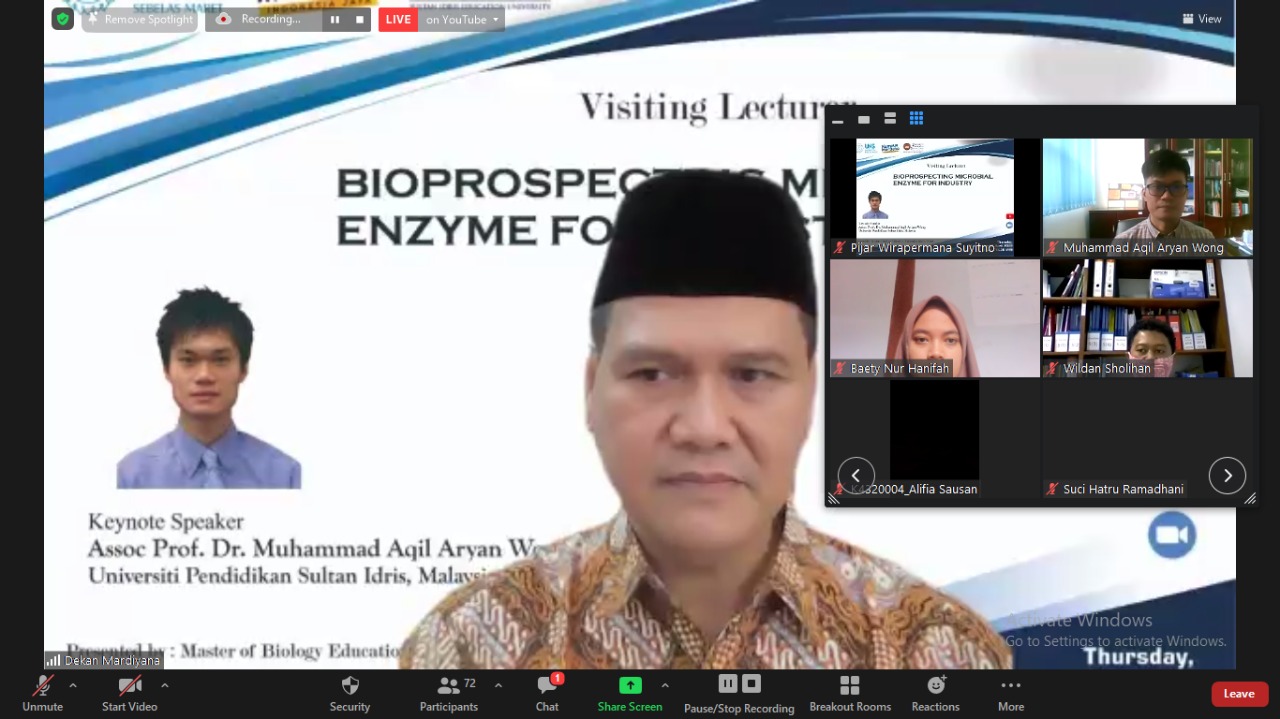
The event began with listening to the anthem Indonesia Raya led by the Master of Ceremony (MC) and followed by the reading of the CV from Assoc. Prof. Dr. Muhammad Aqil Aryan Wong by Dr. Umi Fatmawati, S.Pd M.Si as moderator.
On the first day of the event, Prof. Aqil explained that enzymes have many functions other than their main function as catalysts, such as converting starch to glucose, anti-obesity, producing fatty acid methyl esters, removing lignin to increase white color in paper production, peptide synthesis, animal protease, plant protein ease, and microbial proteases.
“Enzymes have many functions in addition to their main function as catalysts. In the industrial sector, especially in the pharmaceutical sector, for example, several enzymes play a role such as a transaminase, lipase, protease enzymes, and others. Meanwhile, in the food processing sector, enzymes are used to convert starch into glucose. It doesn’t stop there, enzymes, especially lipase inhibitor enzymes also have benefits as anti-obesity by inhibiting the work of the lipase enzyme. As we all know, the lipase enzyme has a role in the body digesting fat into acid. fat and glycerol. Increased levels of fatty acids and glycerol in the body are what then trigger obesity. In addition, several other benefits of enzymes are playing a role in the production of fatty acid methyl esters, removing lignin to increase white color in paper production, peptide synthesis, animal proteases, plant proteases, microbial proteases, and many other benefits other enzymes,” he explained.
According to Prof. Because of the many benefits of enzymes, especially in the industrial sector, there is a need for a technique to be able to produce enzymes on a large scale. One of them is cloning which involves microorganisms producing large amounts of recombinant enzymes.
This event took place in an interesting and conducive manner, participants became more interested in building their prior knowledge about enzymes so that participants could follow the general lecture with a deeper understanding.
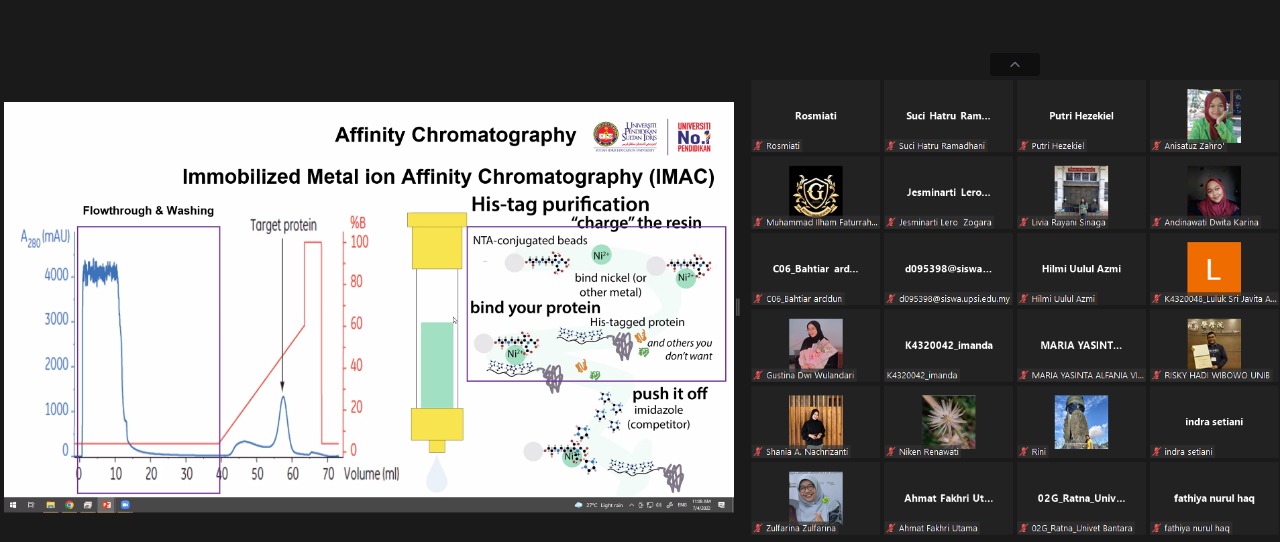
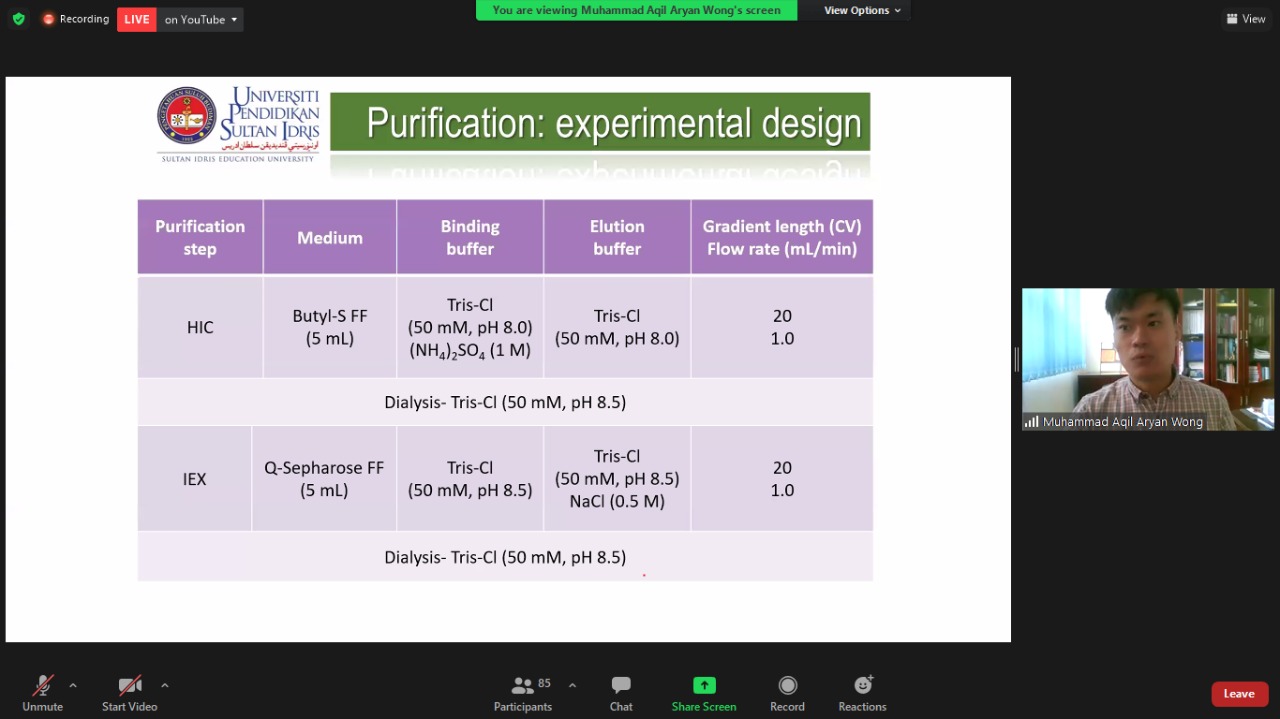
Then, the next visiting lecturer event continued with the presentation of material on purification enzymes. According to Prof. Aqil, enzyme or protein purification is defined as a process carried out to isolate one or more proteins from a complex mixture. If the isolation of this protein is not carried out, the toxic content of penicillin can occur.
“This protein purification is important to be able to determine the amino acid sequence, evolutionary studies, the study of protein structure and function, as well as for use in the medical and health care fields. One example of protein purification is the purification carried out on the Penicillium fungus to obtain penicillin. If this protein purification is not carried out, there may be a possibility of toxic content in the penicillin,” he said.
Not inferior to the enthusiasm of the participants on the first day, on the second day, the participants remained enthusiastic about participating in the event. The enthusiasm and enthusiasm of the participants were evident in the many questions that arose. During the discussion session, the series of events were closed by giving a speaker certificate to Prof. Aqil by the Head of the Biology Education Masters Study Program, Dr. Bowo Sugiharto, S.Pd., M.Pd.
FKIP Public Relations
Reporter: Muhammad Muzaqqi
Editor: Aulia Anjani
https://fkip.uns.ac.id/
https://www.instagram.com/fkipuns.official/
#fkipuns
#fkipbagus
#uns
#universitassebelasmaret
#unsbisa
