

FKIP – The Community Service Team of the Chemistry Education Study Program, Faculty of Teacher Training and Education (FKIP) Universitas Sebelas Maret (UNS) Surakarta held a training on making charcoal made from rice husks as well as its use which can be used as a used cooking oil purifier in Jabung Village, Plupuh District, Sragen Regency on Monday (4/7/2022). This activity is carried out to prepare the people of Jabung village to be ready for entrepreneurship.
The high price of cooking oil and staples that occur in the middle of the community aggravates the economic condition of the community which has not even recovered from the Covid-19 Pandemic. This impact is certainly felt by every community, not spared the Jabung village community is also affected by these conditions. Where many people in Jabung Village still rely on their economy from the results of their rice fields and there are still many people whose economic level is middle to lower.
Departing from this, it is very important to prepare a community that is ready for entrepreneurship to take advantage of everything around it, the Service Team from Chemistry Education FKIP UNS held an evaluation of training on making activated charcoal from rice husks and its use for used cooking oil purification as an entrepreneurial provision for the Jabung village community, Plupuh District, Sragen Regency.
The service team is chaired by Dr.rer.nat. Sri Mulyani M.Si. and consists of Dr.rer.nat. Wirawan Ciptonugroho S.T., M.Si., Dr. Muhammad Hizbul Wathon, M.Sc., Dr. Ari Syahidul Shidiq, M. Pd., This training activity was carried out at the Jabung village hall, Plupuh, Sragen with as many as 60 Jabung Village communities participating. As a result of the evaluation of this training, as many as 36.73% of participants strongly agreed and 53.06% agreed that the community benefited directly from the training activities for making activated charcoal from rice husks and its use for purification of used cooking oil in Jabung village
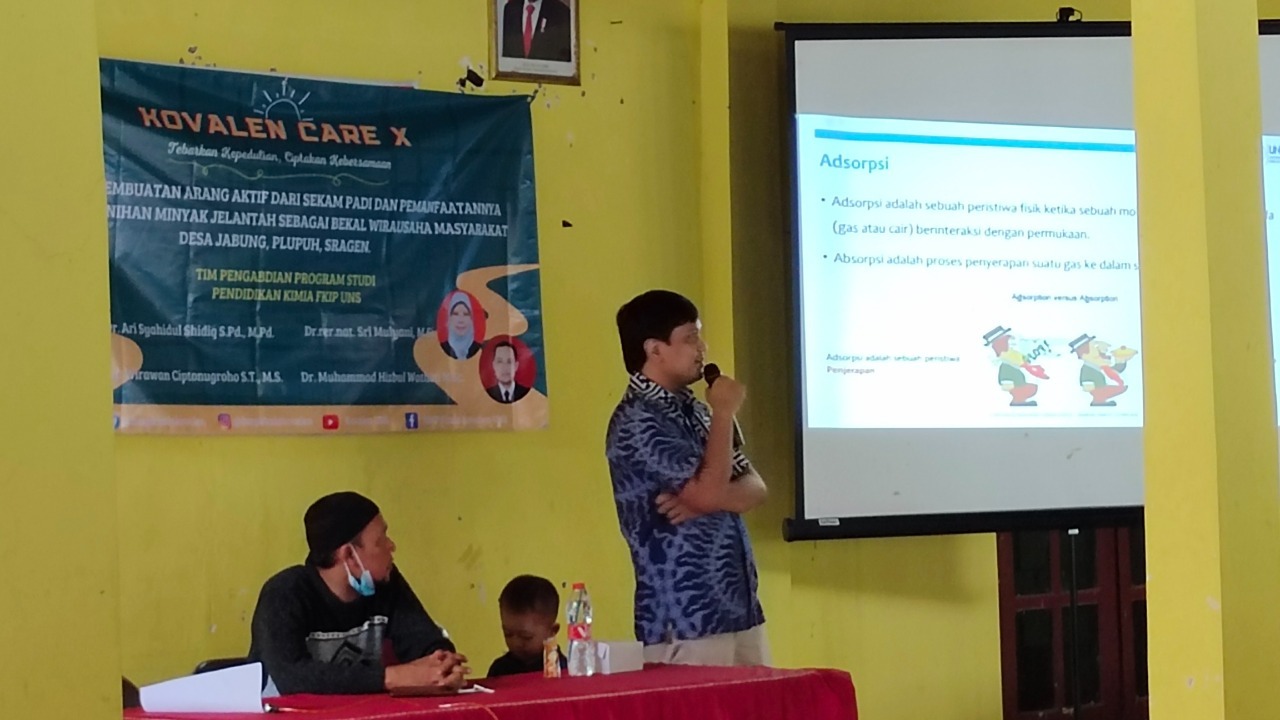
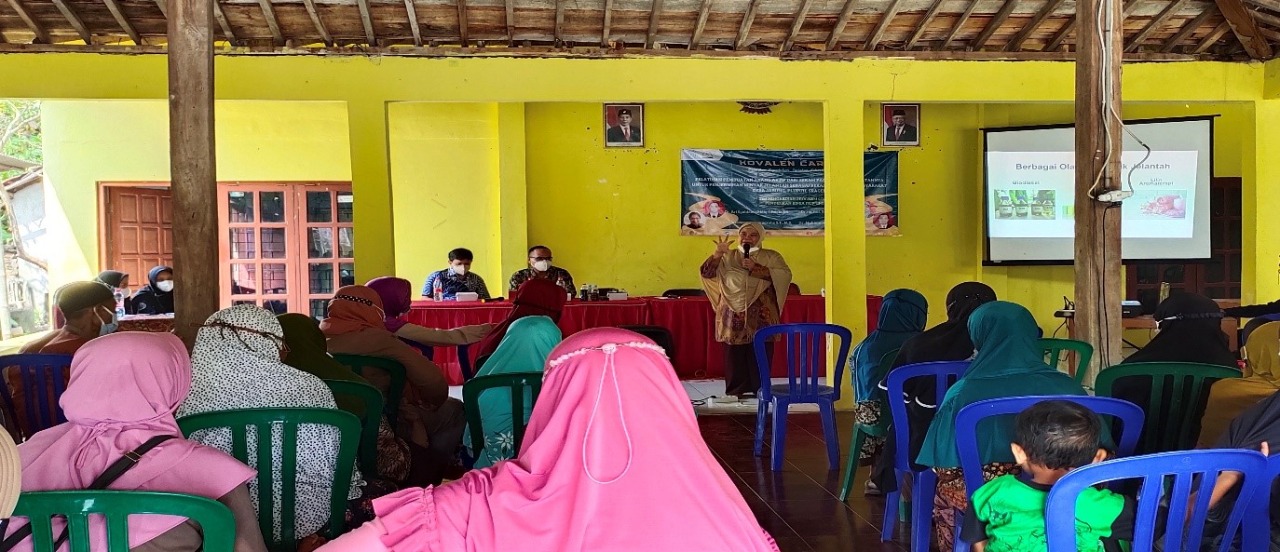 The lecturers explained activated charcoal to open up public insights regarding the benefits of activated charcoal and explained the mechanism of the process of making activated charcoal from rice husks. The activity continued with the presentation of material in the form of the selling value of activated charcoal and the marketing of activated charcoal products from rice husks. With the implementation of this training, it is hoped that the desire for entrepreneurship will grow and utilize rice husks for the purification of used cooking oil so that later it can become the capital of the entrepreneurial community.
FKIP public relations
