
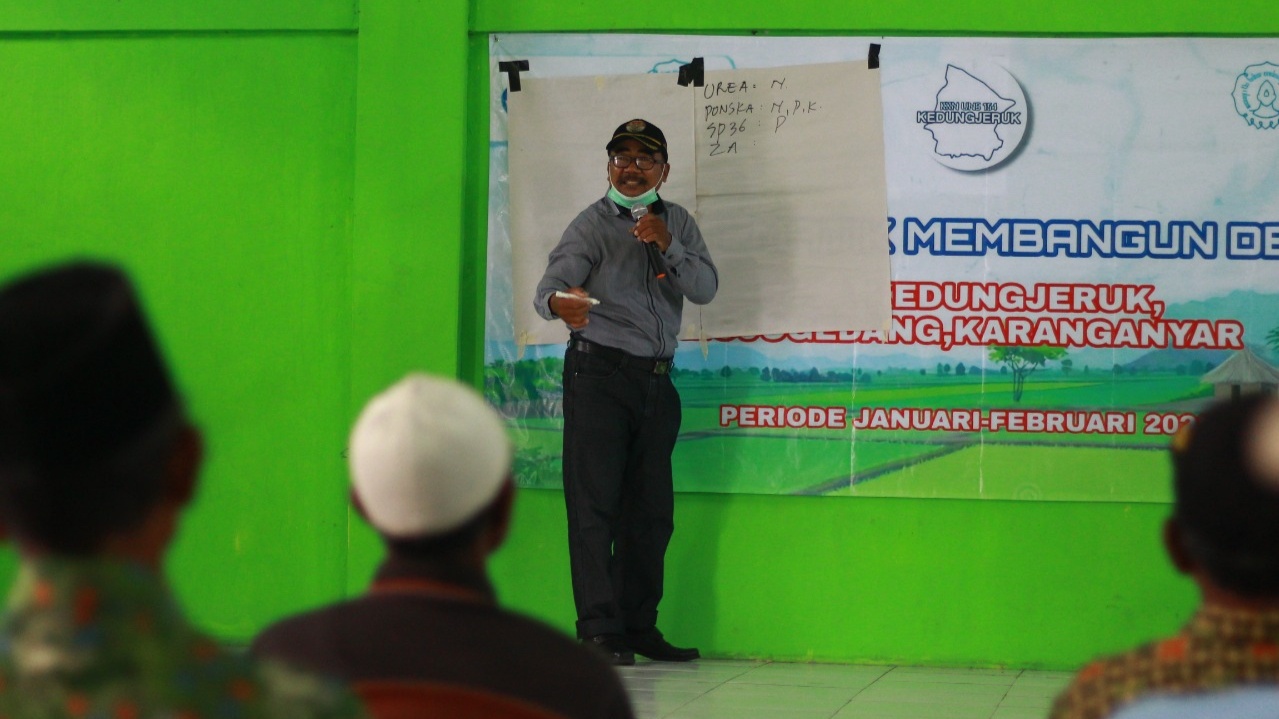
FKIP – Students participating in the Sebelas Maret University (UNS) Real Work Lecture (KKN) Surakarta who are members of the 154 KKN Group have a positive impact on the community in Kedungjeruk Village, Mojogedang District, Karanganyar by holding socialization on the manufacture of organic fertilizer. The activity was carried out on Sunday (1/30/2022) by implementing health protocols.
Chaired by Handika Dwi Santoso, the 154 KKN UNS Group consists of eight members. They are Amanda Yuanita, Leonita Dian Nugraha, Fifin Tria Anggraini, Ayut Quarter, Asri Listyaningrum, Miftah Khoiry Azzam, Andisa Fardhana, and Ika Wahyu Nur Aisa Yulianto.
One of the members of the UNS 154 KKN Group, Ika Wahyu Nur Aisa Yulianto, said that the idea for implementing the work program was motivated by the accumulation of cow dung in Kedungjeruk Village. Therefore, they initiated one of the efforts to manage cow dung into organic fertilizer.
“The idea for implementing this socialization came after we observed the situation in Kedungjeruk Village. We found a situation where a lot of cow dung from the residents’ cages had piled up. Therefore, we initiated efforts to manage the dung so as not to harm the surrounding environment,” he said. Ika to the UNS FKIP Journalist Team, Friday (25/2/2022).
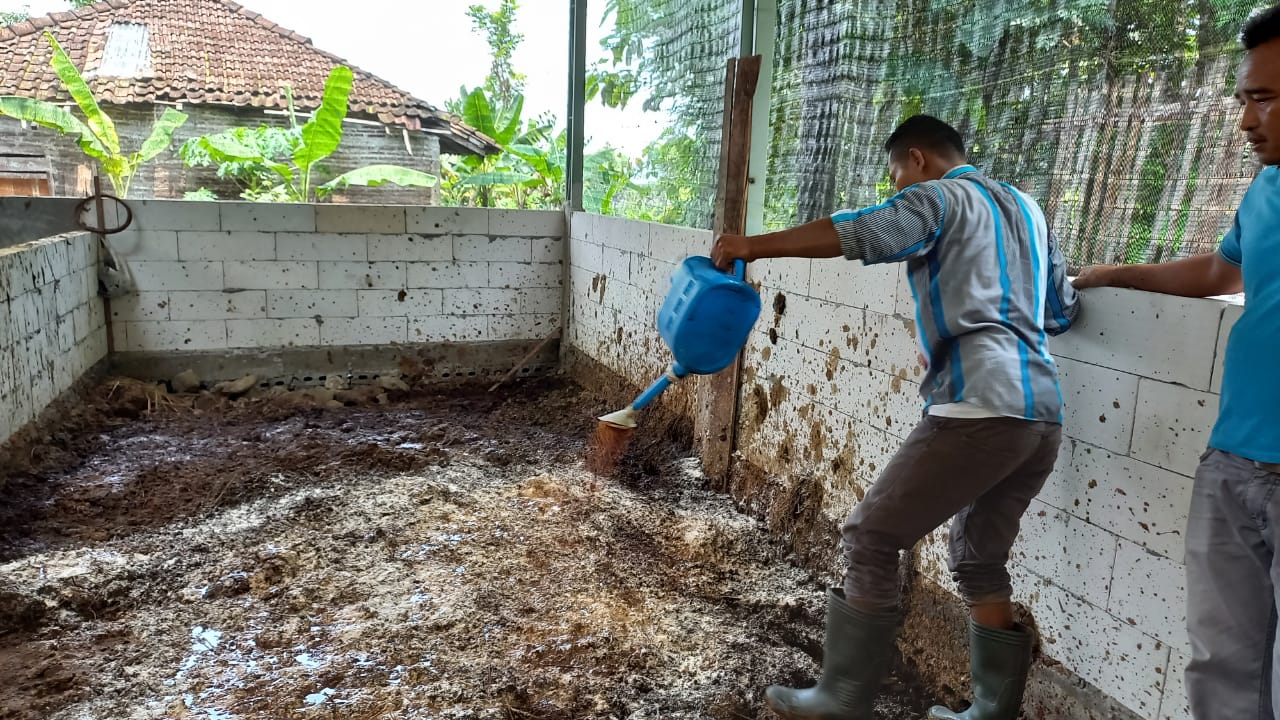
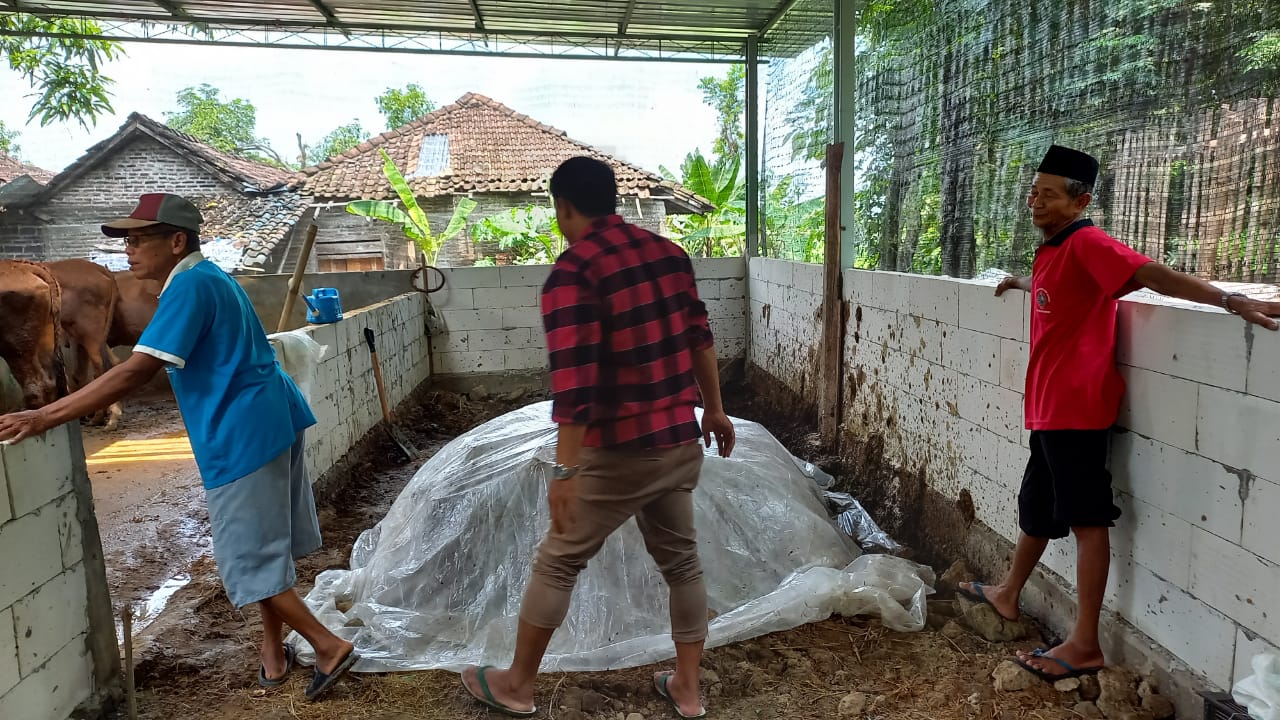
Followed by representatives of the Joint Farmers Group (Gapoktan) Kedungjeruk Village, the socialization presented one resource person. He is the Chairman of the Organic Farmers Network (Jarpeto) of Sukoharjo Regency, Setiyarman. In his presentation, he explained how to manage cow dung or livestock waste into environmentally friendly organic fertilizer.
“As farmers, we must understand what nutrients plants need. One of these nutrients can be obtained from organic fertilizer. Why organic fertilizer? Because it is environmentally friendly and can help fertilize the soil. Organic fertilizer can be processed from a mixture of materials, such as livestock manure, garbage or dry leaves, husk charcoal, dolomite, decomposing bacteria, drops, and water,” said Setiyarman.
At the end of the interview session, Ika and her team hoped that this socialization activity could provide an understanding to farmers on how to make organic fertilizer from livestock manure and its benefits.
“We hope that the implementation of this socialization can help farmers and ranchers in processing cow dung or other livestock waste to be used as organic fertilizer. Thus, they can save costs from the use of chemical fertilizers. In addition, in the long term the use of organic fertilizers can maintain soil fertility,” concluded Ika.
Reporter: Rosantika Utami
Editor: Zalfaa Azalia Pursita
https://fkip.uns.ac.id/
https://www.instagram.com/fkipuns.official/
#fkipuns
#fkipbagus
#uns
#sebelasmaretuniversity
#unsbisa
